Jonas Veenstra wins Christiaan Huygens science award
28 October 2026
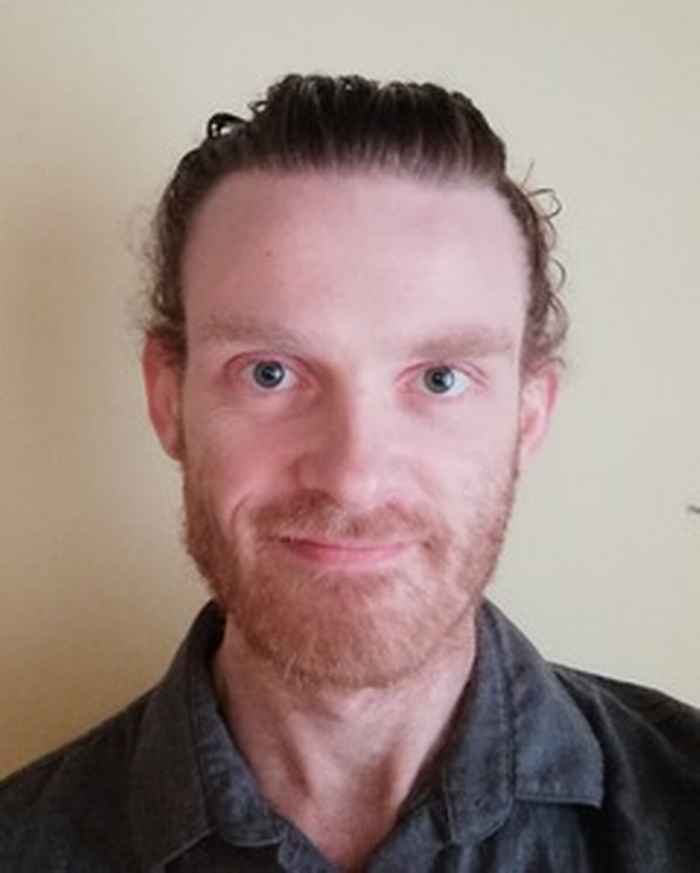
Veenstra, who graduated cum laude on his thesis last year, was in that year also awarded the American Physical Society’s Dissertation Award in Statistical and Nonlinear Physics for his work. He performed his research at the UvA Institute of Physics under the supervision of Corentin Coulais and Jasper van Wezel.
Blurring the line between material and machine
In his thesis, Veenstra focuses on the question how engineered materials can be designed to behave like living systems. Unlike robots, which rely on centralized control and pre-programmed commands, living systems generate robust and adaptive behaviours through distributed, energy-consuming interactions – think of reflexes in the body or the collective sensing of cells. Inspired by this principle, the thesis explores how embedding non-reciprocal interactions into mechanical metamaterials turns them into active solids capable of unidirectional waves, adaptive locomotion, and cyclical shape changes. Using experiments, large-scale simulations, and continuum modelling, Veenstra identified how activity, geometry, nonlinearities, and boundary conditions interplay and give rise to new dynamical regimes that power lifelike behavior. The result is a framework for designing metamaterials that move, adapt, and self-organize, ultimately blurring the line between material and machine.
The jury, chaired by Maria Antonietta Loi, professor of photophysics and optoelectronics at the University of Groningen, considers the thesis to be an exceptional combination of originality, scientific depth, creativity, and impact. “What is particularly impressive,” the jury report states, “is the way in which theory and experiment reinforce one another, leading to fundamentally new insights in a young and rapidly growing field of research.” In doing so, the jury believes the thesis also lays a solid foundation for future research. Furthermore, while fundamental in nature, it offers practical applications across various fields, ranging from robotics to the biomedical sciences.
Christiaan Huygens science award
The Christiaan Huygens science award honours a young researcher who has made an innovative contribution to the space sciences, mathematics, or physics, through their doctoral thesis. The prize has been awarded annually since 1998. In 2026, the focus will be on physics.
In addition to the award for Veenstra, there were two honourable mentions this year: for Jesse Slim (TU Eindhoven) and Kian van der Enden (TU Delft). The Christiaan Huygens Prize Foundation organizes the award ceremony, which is made possible in part by Shell and Besi, sponsors with a demonstrable affinity for the relevant scientific fields. The jury is appointed annually and supported by the Royal Netherlands Academy of Arts and Sciences (KNAW).