Silk-inspired ‘plantymers’ as a biodegradable plastic
23 July 2026
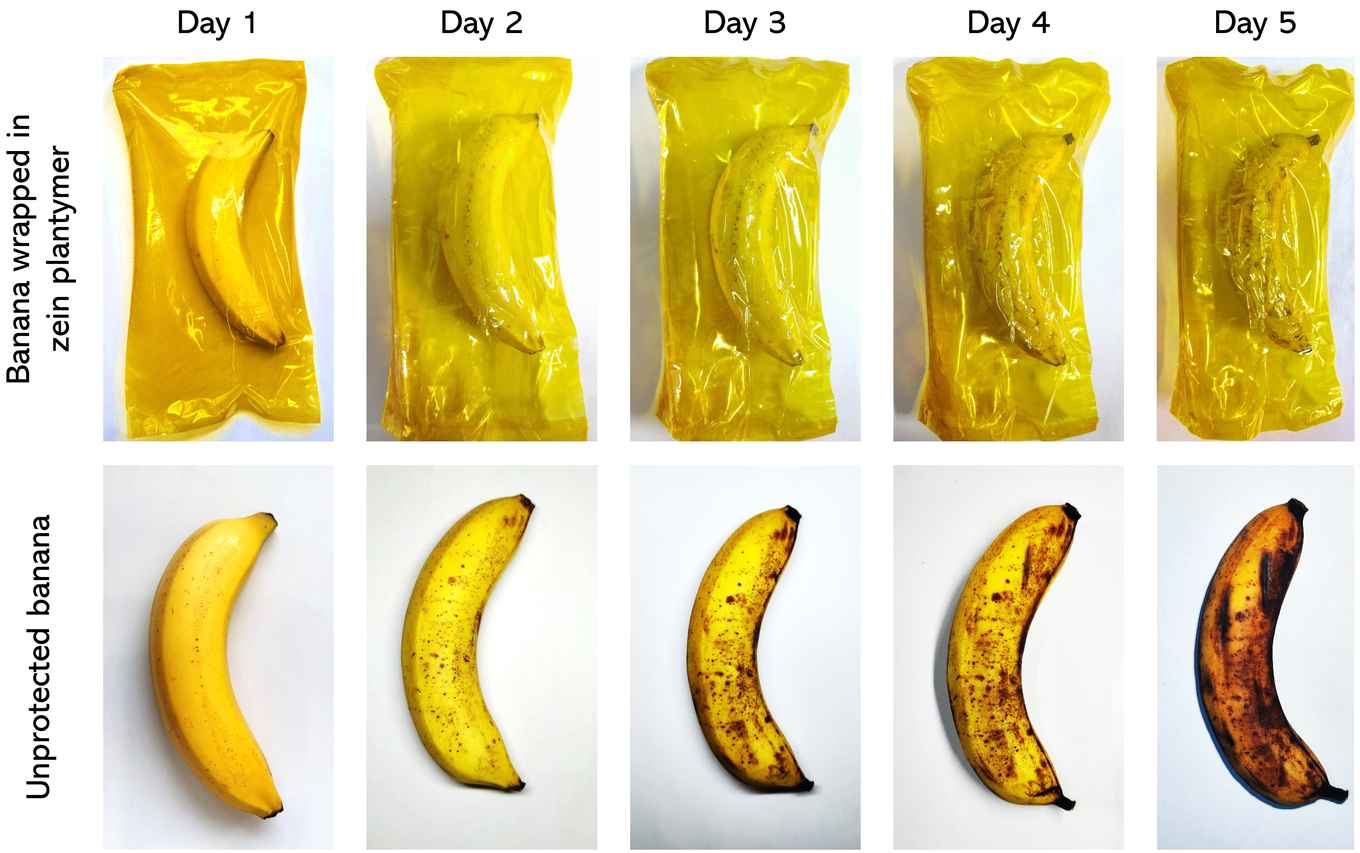
Few materials can compete with plastics. They are remarkably versatile, cheap, water-repellent, light and durable. As a result, plastics are used everywhere: from packaging to healthcare, construction, textiles, furniture and electronics.
Unfortunately, traditional plastics are derived from crude oil and are not biodegradable. Their production and end-of-life incineration contribute to climate change. Plastic also forms a persistent pollutant that has a devastating impact on wildlife, and microplastics accumulate up the food chain with unclear health effects for humans. Plastic pollution is recognised as an important problem by the European Environment Agency and the United Nations Environment Programme.
Enter plantymers, made from plant proteins that are spun or sheared into fibres or sheets. The production of plantymers is similar to how spiders produce silk fibres. Because plantymers are composed of natural proteins, they are biodegradable. This stands in contrast to traditional plastics which are composed of intertwined non-biodegradable hydrocarbon chains.
“We show that the fibers and films that we make via this method are strong enough to compete with fossil-based plastics, and are immediately useful for – for example – fruit packaging,” says Xiufeng Li from Nanjing Agricultural University, who led the research team.
Li worked closely with Yijie Wang from Jiangnan University, a visiting researcher at Wageningen University & Research (WUR), and Wang’s supervisors in the Netherlands, Renko de Vries (WUR) and Joshua Dijksman from the University of Amsterdam.
How to make a plantymer
In principle, plantymers can be made from different plant proteins. For this first demonstration, the research team used the corn protein zein. In its pure form, zein is clear, odourless, tasteless, water-insoluble and edible, and it already has a variety of industrial and food uses.
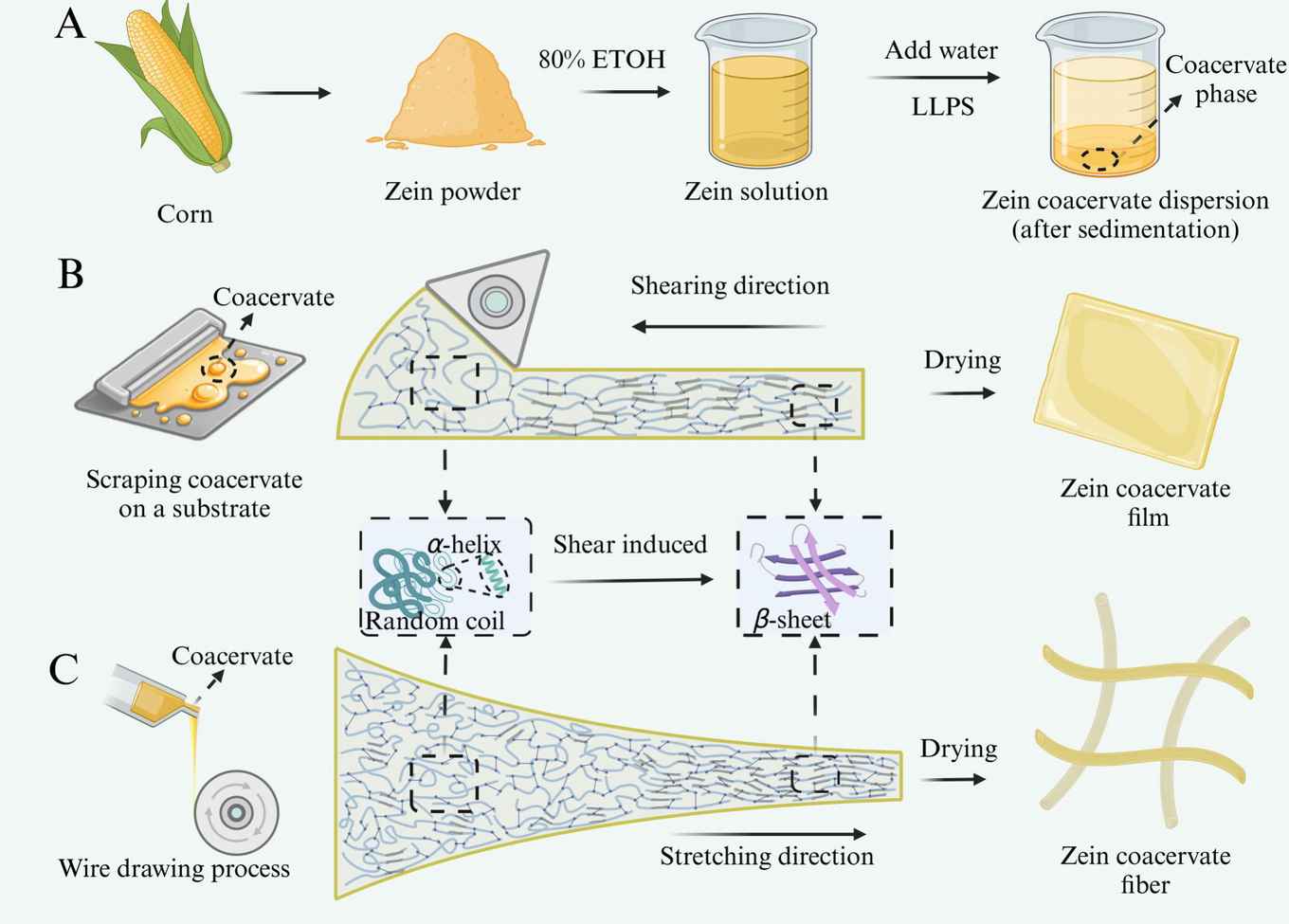
The key to making a plantymer is finding the right way to dissolve the proteins and prepare them for being made into a fibre or film. Zein doesn’t dissolve in water, so the research team first dissolved it in a solution of 80% ethanol. Once the protein was dissolved, they added extra water to the mixture until the solution was only around 47% ethanol.
Because the zein remains water-repellent, it forms protein-rich droplets within the liquid. This protein-rich liquid is called the ‘coacervate phase’, and it can be separated from the water-rich solvent. The coacervate liquids can then be spun or sheared into a plastic-like fibre of film.
The same process is used in nature: Spiders use a similar protein-rich liquid to spin their famously strong silk. Dijksman notes: “The fibre-spinning process is amazingly easy: just let a small amount of solution drip from a nozzle. The dripping creates a flowing thread that immediately dries and becomes a fibre. And to make a film, we simply have to scrape the liquid over a surface.”
The team is now exploring what other proteins from food and agricultural side streams could be used to make plantymers. This concept of turning waste into value is also beginning to be commercialised, marked by the collaboration with a startup enterprise, Upgrade Biopolymers. The mission? To expand the use of this sustainable plastic alternative and help society shift towards a circular economy.
Publication
Silk-Inspired Design and Manufacturing of Robust Plantymers, Yijie Wang, Yue Zhang, Ting Li, Chang Chen, Qimeng Wang, Feipeng Chen, Wei Guo, Chunbao Li, Siddharth Deshpande, Ho Cheung Shum, Jasper van der Gucht, Joshua A. Dijksman, Renko de Vries, Xiufeng Li and Weifu Dong. Nature Communications 17, Article number: 6925 (2026).