UvA opens HoQ Amsterdam, a co-working space for quantum
21 May 2026
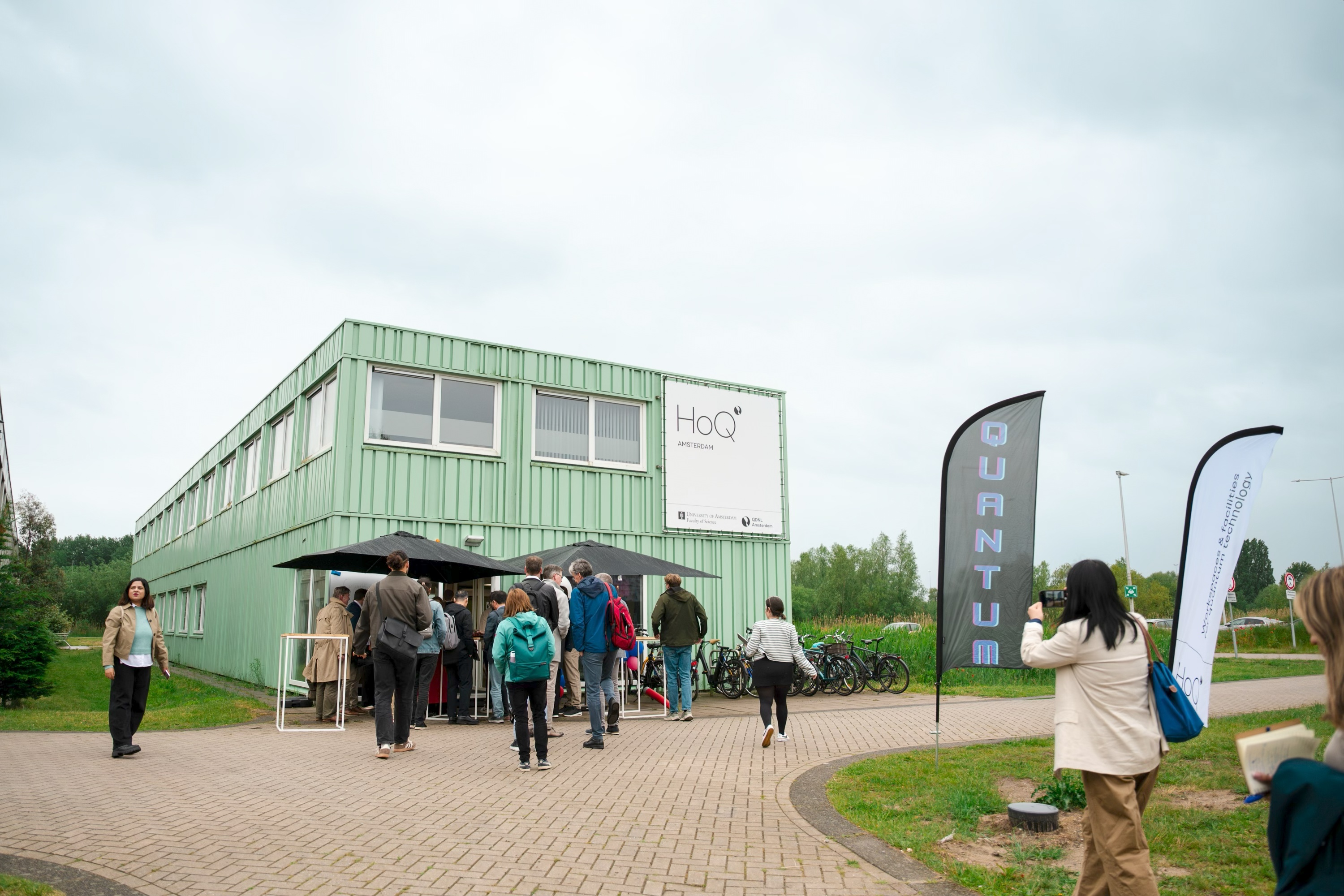
HoQ Amsterdam brings the quantum community together under one roof and serves as a central meeting place for startups and scale-ups. In addition to UvA, the Centrum Wiskunde & Informatica (CWI), Vrije Universiteit Amsterdam, and Amsterdam University of Applied Sciences (HvA) are key partners in the network organization QDNL Amsterdam. By physically bringing these parties together, UvA and QDNL Amsterdam aim to further strengthen collaboration within the ecosystem through HoQ Amsterdam.
Facilities focused on innovation and growth
The building offers a combination of office spaces, meeting facilities, and shared areas, complemented by access to event locations at Startup Village. This infrastructure enables companies to focus on research and commercial projects, while also creating space for collaboration and knowledge sharing.
Stepping stone toward LabQ
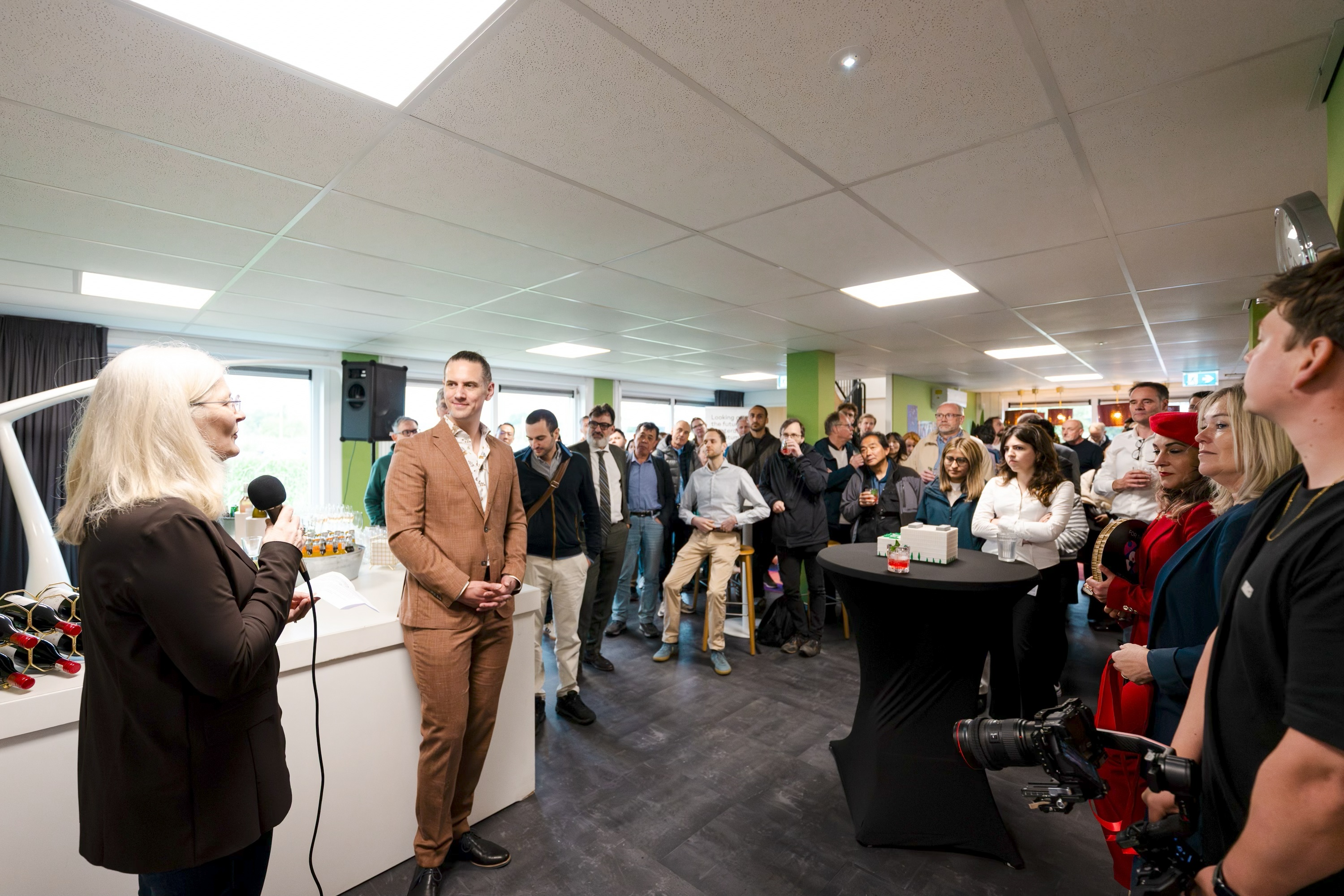
Faculty of Science Dean Prof. Susan te Pas, who officially opened the facility during the event on 19 May 2026 explains: “HoQ Amsterdam is a first step in the run-up to LabQ, the Quantum Hub in Amsterdam, which is expected to be completed in early 2029. This will provide a significant boost to collaboration and innovation in the field of Quantum within the growing AI, Deep Tech, and Quantum ecosystem at the Amsterdam Science Park. LabQ offers 13,000 m² of lab space, educational facilities, and office space for scientists and companies.”
Until then, HoQ Amsterdam will serve as an important hub for the further development of Amsterdam’s quantum cluster.
Rapidly growing community of quantum players
The community surrounding HoQ Amsterdam is growing rapidly, with organizations such as Eoncore, QDNL Amsterdam, WIQD, QDNL, and several stealth-mode companies already involved. Together, they form an ecosystem in which collaboration, knowledge sharing, and innovation are central.
Informal interaction accelerates collaboration and innovation
According to Dimitri van Esch, CEO and founder of Eoncore, the strength of HoQ Amsterdam lies in the daily interactions between companies and researchers.
“Many people underestimate the value of informal encounters. A conversation over coffee or a quick question can already lead to new collaborations. People remain visible to one another, allowing opportunities to arise more quickly,” says Van Esch.
QDNL Amsterdam hub lead Aldo Brinkman adds: “The Amsterdam quantum hub has been built around knowledge institutions such as UvA, CWI, and VU. Access to scientists and students is crucial for companies at this stage of quantum technology development. To take the next step, knowledge institutions and companies will need to work together.”
He continues: “Students are the future talent pool for companies. Scientists can conduct high-risk research that may not be commercially viable within companies. And companies understand the market and the commercialization of R&D.”
With HoQ Amsterdam, UvA, CWI, and QDNL Amsterdam are taking an important step in the further development of a strong and internationally competitive quantum ecosystem in the Netherlands and Europe, where collaboration and knowledge sharing form the foundation for future breakthroughs.