From Spontaneous Collectives to Distributed Machines
28 January 2026
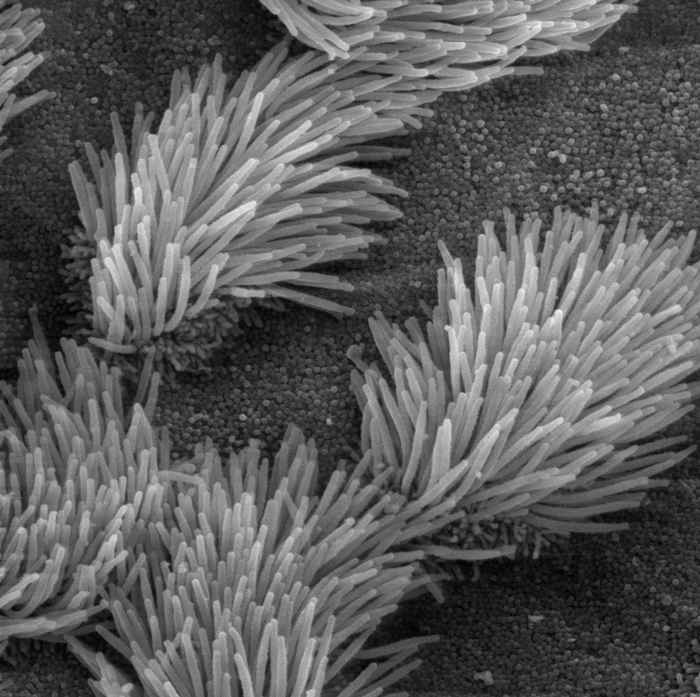
What if we could build internally powered microscale machines with autonomous behavior? Living systems—from bacterial colonies to cell sheets—already provide a blueprint: simple active components interact mechanically to achieve shape-changes, locomotion, and signal transmission. Their distributed architecture ensures robust and adaptive function, contrary to man-made machines, which rely on top-down control. Synthetic active matter—ensembles of self-propelled particles that spontaneously organize—offers a route to emulate such animate behavior, but remains fluid-like and unable to sustain forces or maintain shape, complicating deployment for mechanical tasks.
In his project, Veenstra will develop active colloidal solids: mechanically linked assemblies of self-propelled microparticles that combine activity with rigidity to generate shape-changes, locomotion, and adaptive mechanical responses. The efforts will generate a new platform to probe and control active matter and establish design principles for adaptive behavior in autonomous microscale machines. The resulting framework will provide a foundation for applications in lab-on-chip devices capable of sensing and actuation, and drug delivery systems that navigate complex environments.
Rubicon
The Rubicon grant enables young researchers to conduct research at a foreign institute that offers the best environment for their research. Veenstra, who recently graduated cum laude and received an APS Dissertation Award for his thesis, will use the grant to carry out his project at ENS Lyon for a duration of two years.