ENW-M grants for three IoP researchers
28 January 2026
Trapped ion qudits for quantum computation
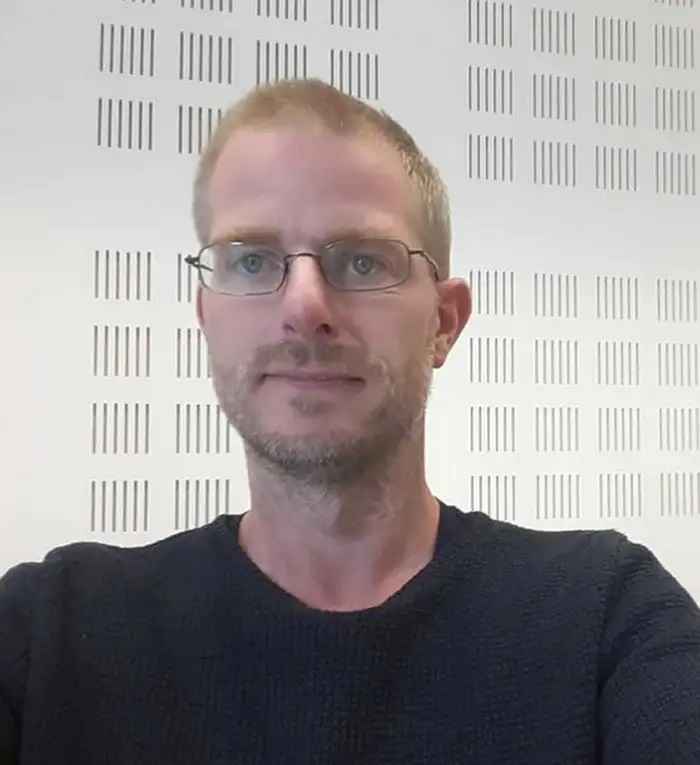
Trapped ions are among the most accurate quantum computers to date. However, scaling up the system to include many ions has proven hard. In this project, Gerritsma and a PhD student will improve the scalability by encoding qudits in the ions, instead of the usual qubits. In this way, each ion can carry more quantum information. To do so, the team will use an ion species with a large nuclear spin, that can encode many qudit states. This ion has not been used before in trapped ion quantum computing. They will use state-of-the-art optical tweezers to implement quantum operations between the qudits.
When a Higgs boson meets a top quark
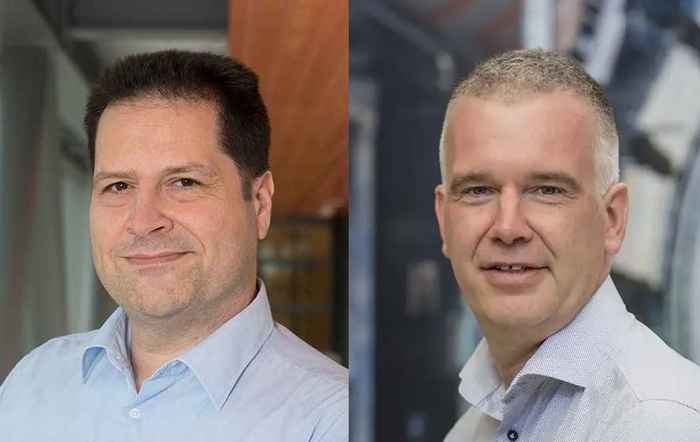
In the coming years, the Large Hadron Collider at CERN provides three times the number of collisions we have now. This allows us to study nature at the femtometer scale where quantum interactions are described by the Standard Model of Particle Physics. In their project, Vreeswijk, Verkerke and two PhD students focus on collisions in which Higgs bosons or top quarks are produced, together with a Z boson, which are the heaviest particles known today. They develop a new deep-learning Transformer technique to combine the measurements of these processes that will optimize the sensitivity to our search for physics beyond the SM, described by the framework of Effective Field Theory.
ENW-M
M-grants, awarded by the Dutch Research Council (NWO), are intended for realising curiosity-driven, fundamental research of high quality and/or scientific urgency. The M-grants offer researchers the possibility to elaborate creative and risky ideas and to realise scientific innovations that can form the basis for the research themes of the future. The M1 grant provides funding for one scientific position; the M2 grant for two scientific positions in collaboration.