Florian Schreck receives funding for cutting-edge research on photonic chips
5 December 2025
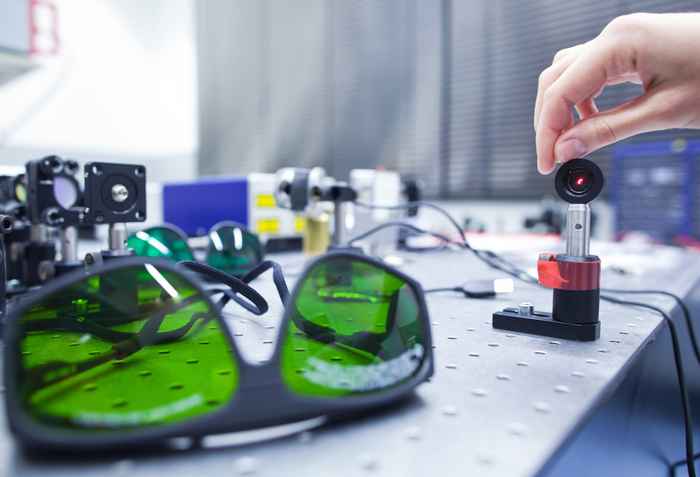
Photonic chips working with light particles are a lot more energy-efficient, faster and have more capacity than (traditional) electronic chips. Because of this enormous potential, it is one of the ten priority technologies from the Dutch government's National Technology Strategy (NTS).
With this research programme, NWO and PhotonDelta aim to stimulate research into innovative materials, components and systems within integrated photonics on new, promising themes that provide a valuable addition to the already existing projects at PhotonDelta.
Integrated Optical Circuits for Quantum Technology
In Florian Schreck's project, his team is developing new technology to make the world’s most precise clocks and quantum devices smaller, cheaper, and much easier to use. These “optical clocks” have the potential to improve GPS, help predict natural disasters, make the internet more reliable, and even discover new physics. The project combines Dutch expertise in quantum technology and tiny “photonic chips” to create robust, user-friendly systems that no longer require delicate adjustments by specialists. By making these quantum technologies accessible beyond research labs, the team aims to boost innovation and strengthen the Netherlands’ leadership in high-tech solutions for society.
Another recipient of one of the grants is Philippe Bouyer, who has a joint position between the University of Amsterdam and TU Eindhoven. In his Eindhoven-based project "G(a)LAQTIC", Bouyer will use advanced glass-based photonics to trap and move single atoms with incredible precision.