Next step for collaboration between UvA and VU physicists and astronomers
On Thursday 3 October, the collective scientific and support staff of the Institute of Physics, the Astronomical Institute Anton Pannekoek and the VU-FEW Physics department met to discuss their planned integration in the Amsterdam Faculty of Science (AFS). The goal of the meeting, apart from strengthening the ties at a personal level, was to discuss organizational aspects of the future AFS Department of Physics and Astronomy.
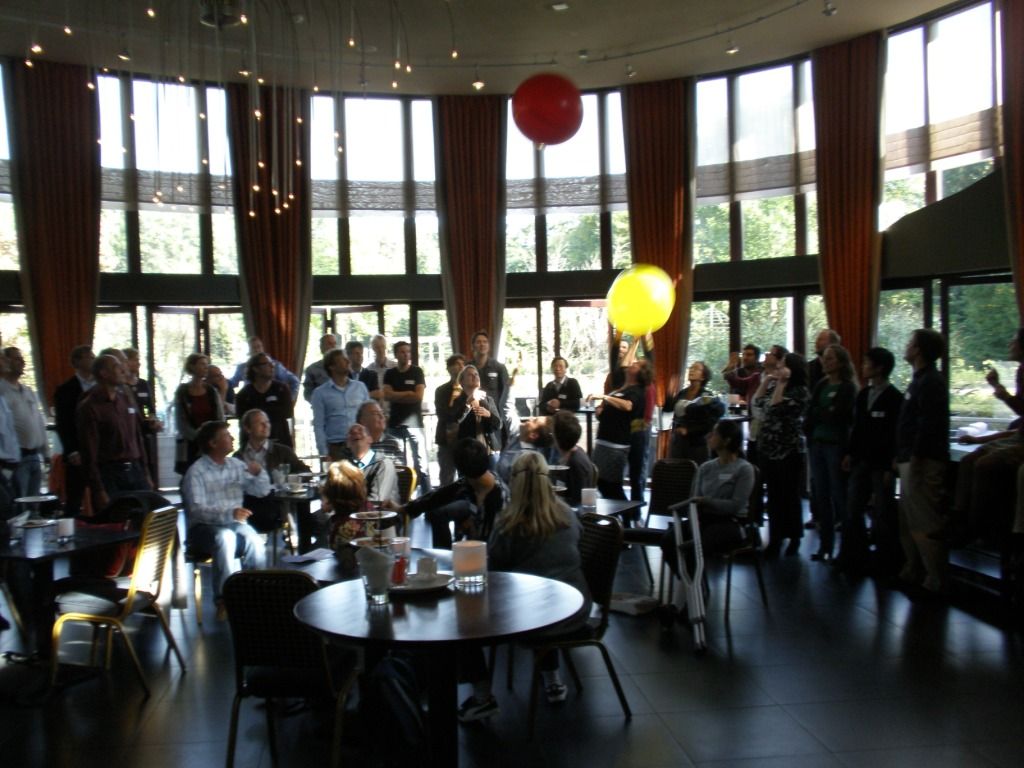
The meeting was organized in an informal and playful setting. The lively discussions about differences and similarities between the three current organizational units made it clear that any differences are perceived as small: smaller at least than the differences among individual research groups. Among the topics covered were the potential differences in the assignment of educational tasks between the various units (as it turned out: none) and the question of what forms of support (technical, ICT, administrative, PR/outreach) the staff would like to see organized at a departmental level (or at least within the AFS boundaries). Here, the urgency to recognize the specific ICT requirements for a physics and astronomy environment was expressed repeatedly.
CNL, SRON, Solardam, Soft/bio, ...
Wim Ubachs, head of the VU physics department, indicated in his introductory presentation that a detailed new curriculum has been designed and proposed for the joint bachelor program Physics and Astronomy, which is broadly viewed as an improvement with respect to the current programs. This joint bachelor program should be able to start in September 2014, provided a few organizational hurdles will be overcome in the meantime. Ubachs also defined a challenge: to live up to the expectation that the new programs within the AFS will increasingly attract new students, in particular foreign ones.
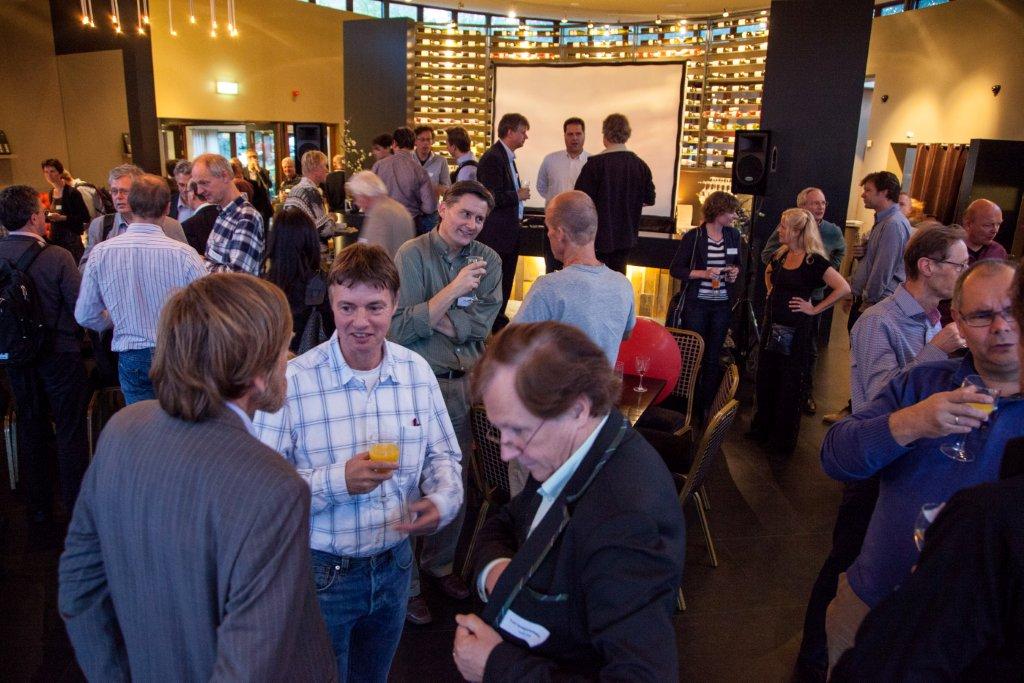
Even at this relatively early stage of the AFS integration process, UvA and VU physicists and astronomers are able to report a few marked successes of their joint efforts. The SRON institute (space research), for example, will move to the Science Park Amsterdam in view of the interesting combination of scientific disciplines that will flock to that campus in the coming years: not only astronomers and physicists, but also earth scientists (earth observation and climate research). In addition, the foundation of the Centre for Nanolithography (CNL) at the Science Park is for a large part the result of the opportunities for collaboration with the physics institutes, as well as with the FOM institute AMOLF. The CNL will house some hundred scientists with strong ties to physicists and chemists of the AFS.
New opportunities for collaboration have also been identified among the researchers of both universities themselves over the past year. A significant number of physicists and chemists of UvA, VU and AMOLF, have decided to join forces for a new, coherent solar energy research program called ‘Solardam’. In addition, the research groups Soft Matter and Physics of Living Systems have formulated serious joint ambitions. Researchers within high-energy physics, on the other hand, already have a long-standing tradition of collaboration within the national research institute Nikhef, also located on the Science Park.
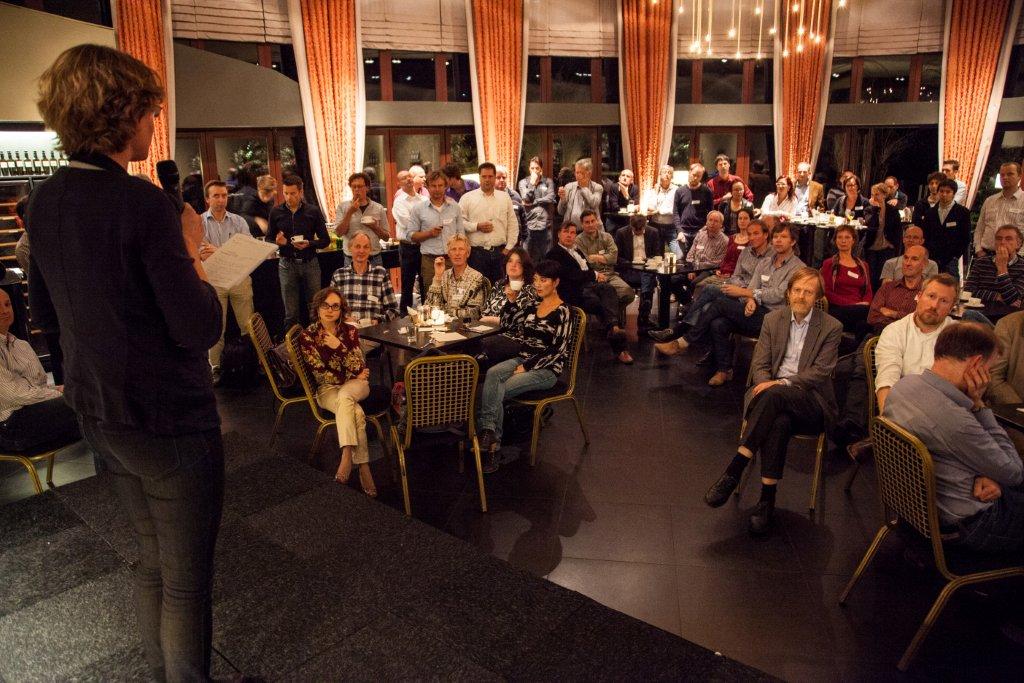
Agglomeration of Physics and Astronomy on the Science Park
In view of the above, the new AFS Department of Physics and Astronomy will naturally be housed on the Science Park, resulting in both a large concentration of researchers and of collaboration potential. This will be the starting point for competing with the most prominent research centers in Europe and the rest of the world. These developments provide excellent opportunities for the bachelors and masters programs as well: the wide range and high quality of research fields will significantly expand the possibilities for interesting internships. Last but not least, the concentration of research and technology has the implicit potential of bringing new start-up companies and other economic activities to the Amsterdam region.
Also in the aftermath of the joint meeting on 3 October, the scientific and support staff of the current department and institutes will remain involved continuously in the establishment and organization of the new AFS Department.