New FOM Program funded: The Missing Universe - What is the subatomic constituent of Dark Matter?
A “Vrije Programma” grant of 2.0M€ from Foundation FOM will allow several UvA faculty members at the Institute of Physics, all associated to the UvA research priority area GRAPPA, to carry out a research program to investigate the nature of Dark Matter over the next six years.
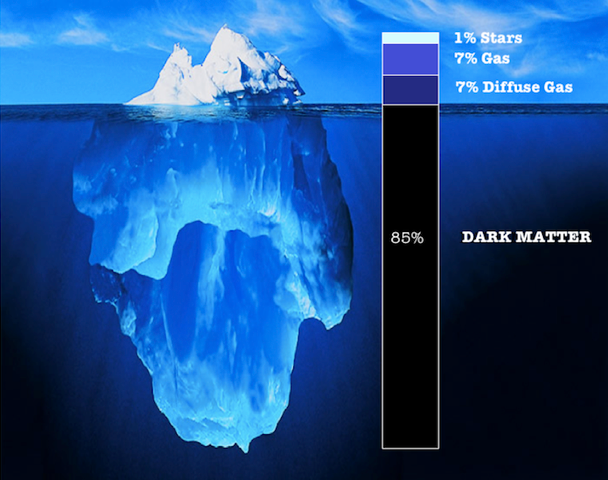
Astronomical observations consistently point to a picture where only about 15% of the matter in the Universe is visible and made up of known Standard Model particles. The remaining 85% of matter in the Universe, so-called Dark Matter, is not directly observable but can be deduced from indirect, gravitational evidence. The nature of Dark Matter is unknown; it has to be some new subatomic particle. This fits the expectation from subatomic physics where extensions of the Standard Model of particle physics suggest that new particles must exist: some of these hypothetical particles are perfect Dark Matter candidates.
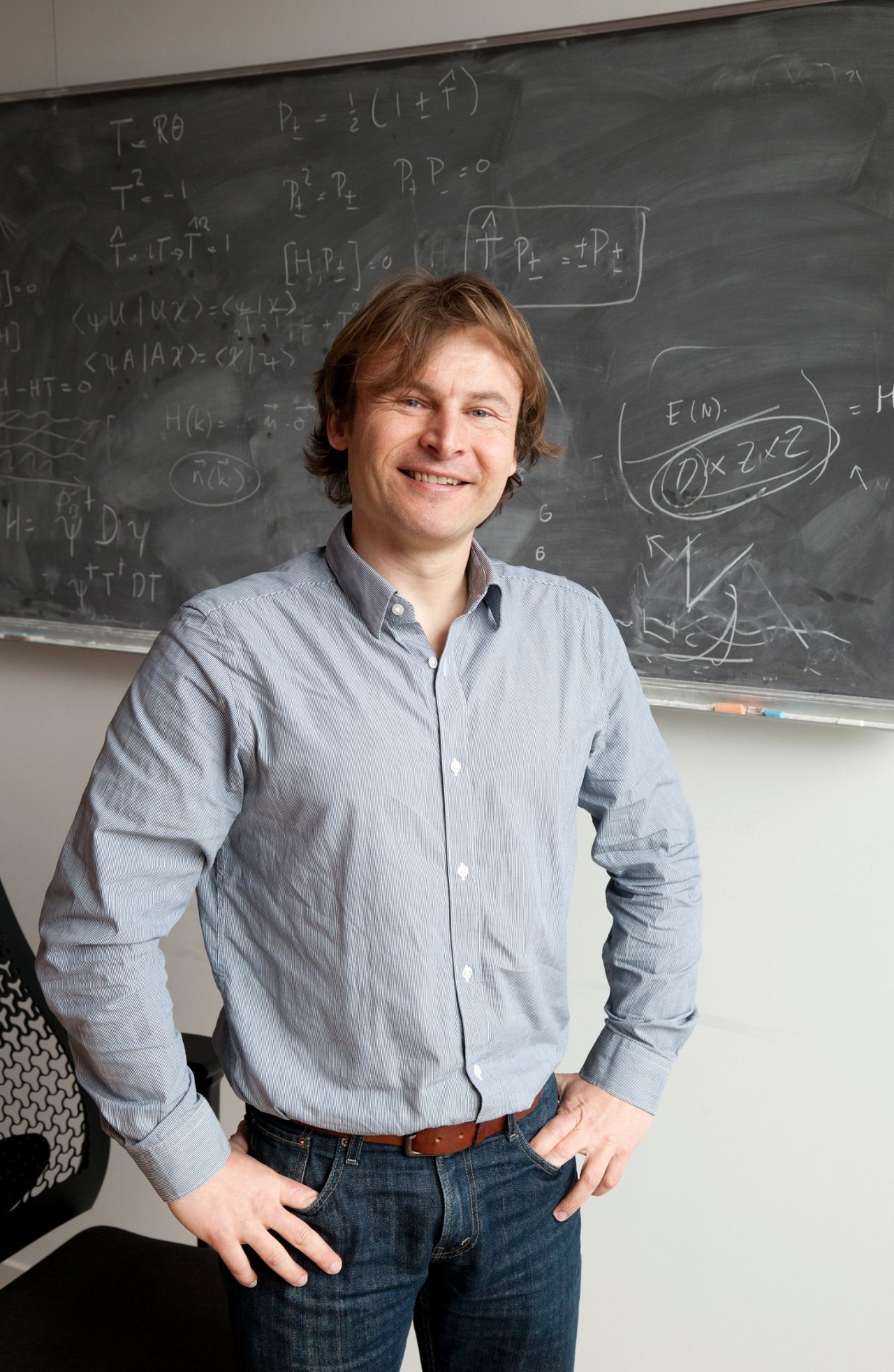
The funded research program will allow an experimental and theoretical investigation with the goal to identify the particle responsible for Dark Matter. The granted FOM program will allow the researchers to participate in experiments aimed at so-called direct detection of Dark Matter. Program leader dr. Patrick Decowski (UvA/Nikhef): “A worldwide hunt is taking place for Dark Matter particles. All these scientists would love to be the first to spot them. The Nikhef institute for subatomic physics is a partner in the XENON100 experiment that is presently running the most sensitive Dark Matter experiment to date. We are also building its successor, XENON1T, scheduled to start collecting Dark Matter data in 2015. XENON1T will be a hundred times more sensitive than XENON100. At the same time, we will be pursuing a vigorous program to work on outstanding theoretical questions and astrophysical uncertainties that directly impact the analysis of dark matter data. Finally, we aim to combine all the available Dark Matter information to extract as much information about the Dark Matter particle as possible. The experimental and theoretical projects included in the FOM program will push the Netherlands to the forefront of Dark Matter research worldwide.”
The program is a collaboration between scientists within the GRAPPA research priority area of the UvA (Decowski, Ando, Bertone) and Nikhef (Van Bakel, Colijn, Linde and Postma).
Four other new FOM programs funded
In this round, the Foundation FOM has awarded a total budget of 9.9 M€ to five new research programs. These FOM ‘Vrije programma’s’ bring together the best research groups in their respective fields in the Netherlands. In each research program the specialists from the various Dutch knowledge institutes combine their strengths. With this FOM realises what is termed 'focus and mass' in policy jargon: working on a limited number of challenging scientific subjects, with a large number of the best researchers in the Netherlands, with the research being coordinated at a national level.
The five programs awarded funding are the winners in a heavy competition that started last spring with 18 submitted proposals. On the basis of verbal presentations, recommendations from committees and a critical evaluation by international experts concerning the scientific quality of the applications, the FOM Executive Board has awarded the highest-scoring applications with the funds they requested.