Silicon nanocrystals pave way for better solar cells
Closely packed silicon nanocrystals have the ability to very efficiently convert incoming light in at least twice as many carriers. This was shown by a group of physicists from the University of Amsterdam in cooperation with a colleague from Charles University of Prague and published in an Advance Online Publication of Nature Nanotechnology on October 9.
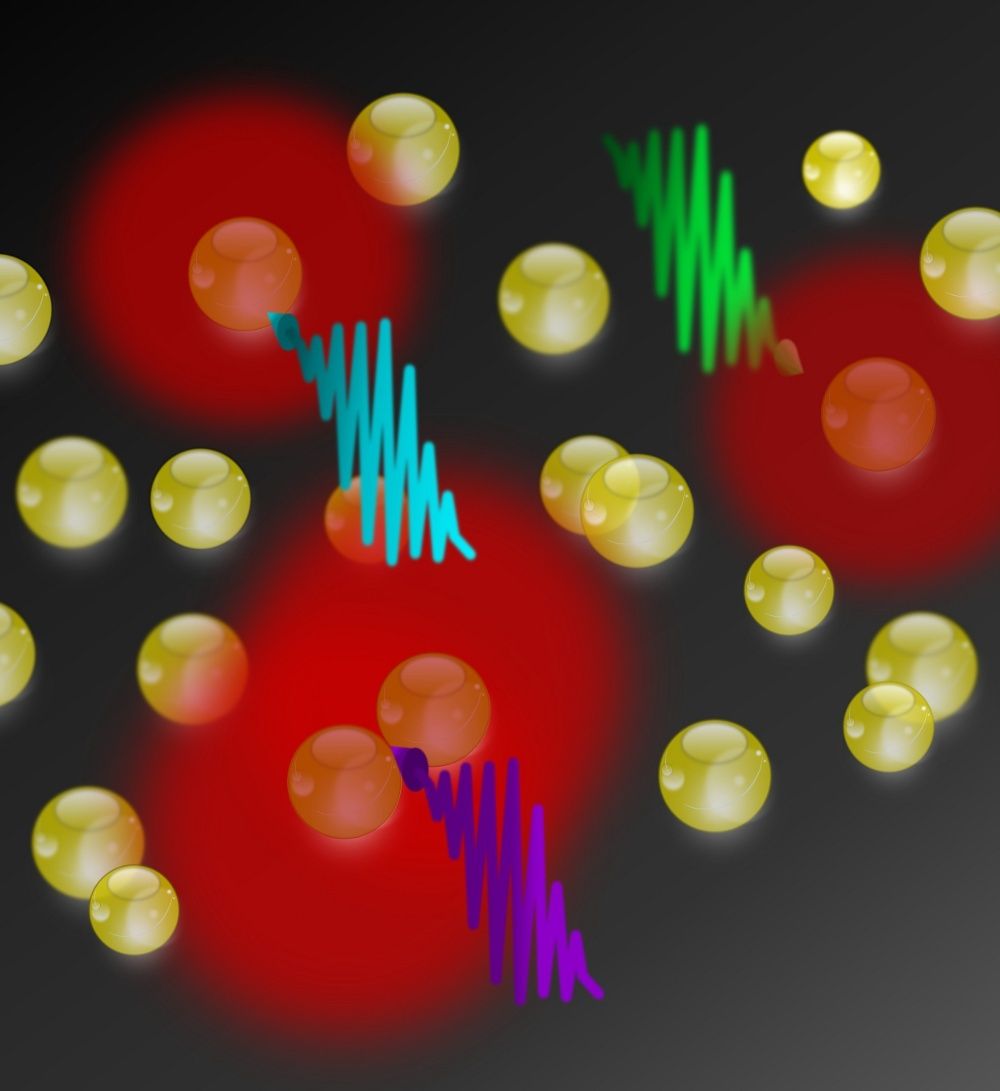
Closely packed silicon nanocrystals have the ability to very efficiently convert incoming light in at least twice as many carriers. This was shown by a group of physicists from the University of Amsterdam in cooperation with a colleague from Charles University of Prague.
It was already known that conversion of light particles (photons) in multiple electronic carriers took place in different types of semiconductors, but there has always been a lot of discussion on the efficiency of this process. The researchers now showed that in silicon nanocrystals, this multiplication can be very efficient and that it takes place at energies available in the solar spectrum. Therefore, a dense packing of silicon nanocrystals may now be used to increase the efficiency of solar cells. The researchers published their results in an Advance Online Publication of Nature Nanotechnology on October 9.
Efficiency increase
For their study, the experimental physicists made use of two types of silicon nanocrystals. The first one was produced by depositing a thin film of silicon and silicon-dioxide on a quartz substrate and subsequently heating it to induce silicon nanocrystal formation, typically of 3 – 4 nanometer in size. The second type was produced by electrochemical etching of crystalline silicon wafer, leaving porous silicon grains that consist of many nanocrystals (typically 1 – 3 nanometer). Both types were exposed to different colors of light. The energy of the photons from that light is absorbed by the nanocrystals and subsequently emitted as photoluminescence. The yield of this light is a measure for the number of charge carriers that has been generated.
The researchers showed that, contrary to what is normally seen in semiconductor nanocrystals, the yield increases when the photon energy increases. Also increasing the concentration of nanocrystals was shown to be beneficial for this process. The multiplication of charge carriers takes place at energies available in the solar spectrum, indicating the application potential for solar cells. This idea will now be tested in device structures to investigate whether there is still an increase in production of carriers.