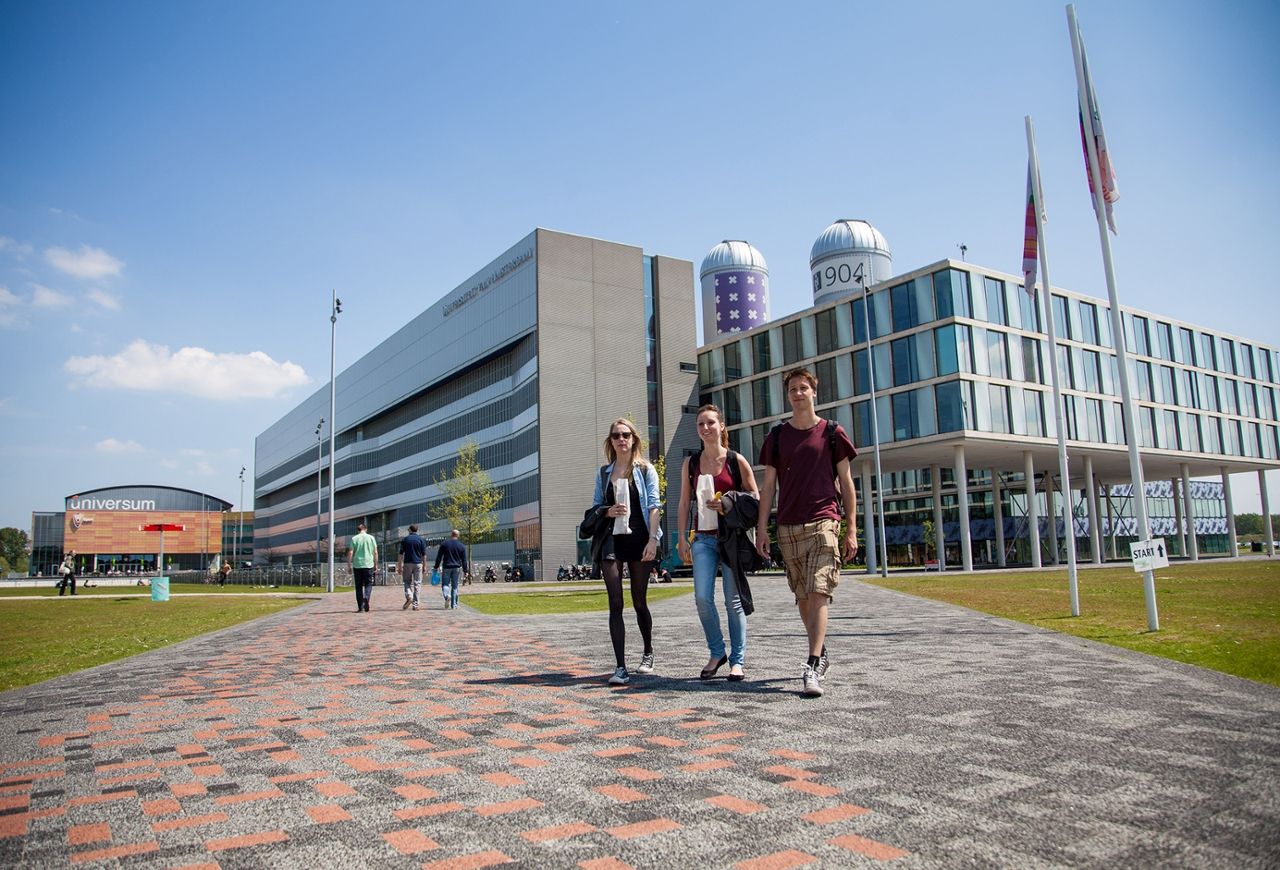
|Change of location to G2.10 SP 904| Prof. Halina Rubinsztein-Dunlop: Sculpted light nano and micro systems
Colloquium by Prof. Halina Rubinsztein-Dunlop, School of Mathematics and Physics, The University of Queensland (Australia)
Prof Halina Rubinsztein-Dunlop is the Director of Translational Research Program at the ARC CoE for Engineered Quantum System, and a Professor of Physics, at University of Queensland. There, she leads groups in experimental quantum atom optics, laser micromanipulation and biophotonics. Halina is the recipient of many national and international awards, including Officer in the General Division of the Order of Australia, OSA 2021 C.E.K. Mees Medal and AIP Harrie Massey Medal. She is a Fellow of Australian Academy of Science, Fellow of SPIE, Fellow of Optica and Fellow of Australian Institute of Physics.
Event details from: |Change of location to G2.10 SP 904| Prof. Halina Rubinsztein-Dunlop: Sculpted light nano and micro systems
- Date
- 3 November 2022
- Time
- 16:00 – 17:00

Sculpted light refers to the generation of custom designed light fields. These light fields can be applied in many diverse fields ranging from interrogating single atoms or atom assembly to using these fields for optical micromanipulation and optical tweezers as well as creating new quantum devices and sensors. We consider here the study and application of light with structured intensity, polarization and phase. We can create custom fields in multiple planes using dynamic and geometric phase control. Sculpted light can be generated using spatial light modulators (SLM) or Digital Micromirror Devices (DMD) that enable the production of configurable and flexible confining potentials at the nano and micron-scale, enabling production of highly configurable time-averaged traps. All these methods achieve dynamical and flexible sculpted light fields and enable imaging of the amplitude patterns, phase and polarization. These sculpted lights can be used for intricate studies of light -matter interactions in a variety of environments. I will describe their use in trapping and manipulating nano and micron-size objects ranging from ultra-cold atoms to measurements in-vivo inside biological cells and for studies of active matter.
Drinks will be served after the colloquium.